EuRyQa project concludes after establishing neutral atom quantum computing as a leading European platform
Strasbourg, March 2026 — The EU-funded project EuRyQa (European infrastructure for Rydberg Quantum Computing) has successfully concluded after more than three years of collaborative research, having positioned neutral atom quantum processors as one of the most promising platforms for scalable, fault-tolerant quantum computing in Europe and worldwide.
Funded under the Horizon Europe programme with a budget of nearly €5 million, EuRyQa brought together 11 partners from seven countries, uniting academic institutions at the forefront of ultracold atom research with key industrial players in quantum hardware, electronics, firmware, and software. Coordinated by the University of Strasbourg, the project set out with the bold ambition of developing Rydberg quantum processors into a leading platform for scalable quantum computing. That ambition has been realised and, in many areas, exceeded.
From ambitious goals to transformative results
At the outset of the project, neutral atom systems had demonstrated configurations of just over 200 qubits. Over the course of EuRyQa, consortium partners scaled this capability dramatically, assembling arrays of more than 1,000 atoms with precise control, while developing clear roadmaps for further scaling using improved optical systems, stronger lasers, and advanced trapping techniques.
A defining achievement of the project has been the transition of the field from imperfect, early-stage quantum computers to a concrete understanding of how to build fault-tolerant quantum computers in the near future. Consortium researchers developed what are now considered the best protocols for performing quantum gates between atoms at the physical level, a result that has been adopted by research groups worldwide and is considered essential for the continued development of neutral atom quantum computing.
Equally significant, several partners developed highly efficient approaches to quantum error correction tailored to neutral atom systems, alongside novel ideas for achieving full fault tolerance. These advances were not foreseen at the start of the project and represent some of its most impactful scientific contributions.
Five platforms and a growing European ecosystem
EuRyQa brought together four complementary Rydberg quantum computing platforms across Europe, expanding this portfolio to five during the project. Developed by leading teams at the University of Strasbourg, the University of Stuttgart, the University of Amsterdam, Eindhoven University of Technology, and the European quantum computing company PASQAL, these platforms represent a significant milestone for Europe’s quantum ecosystem. All platforms will become available in the near future, with those at Eindhoven University of Technology and PASQAL being already accessible online, forming a key component of Europe’s next-generation quantum computing infrastructure.
The project also gave rise to new companies. QPerfect, spun out of the European Center for Quantum Sciences in Strasbourg in 2023, has developed Mimic, a quantum emulator that allows users to test and develop quantum algorithms at scale and to benchmark quantum computers. Following a successful seed funding round, the company is now developing a Quantum Logic Unit to enable fault-tolerant quantum algorithms specifically for neutral atom processors. Meanwhile, Atomiq, currently in its funding phase in Stuttgart, is building a unified software framework to integrate and control the diverse hardware components found in quantum computing laboratories.
A model for European collaboration
A distinctive feature of EuRyQa was its deliberate long-term strategy, developed from the outset, that brought together academic innovation with private-sector capabilities. Each partner played a defined role, from enabling technologies and atom control to scheduling, electronics, and industrial-grade control systems. This model of structured, friendly competition, where partners developed different technologies while openly sharing solutions, proved highly effective and is considered a replicable blueprint for future European research programmes.
"EuRyQa has been a transformative project for Europe," said Prof. Guido Pupillo, project coordinator from the University of Strasbourg. "It had the boldness to envision neutral atom quantum computers as a leading technology and it demonstrated how to make that vision a reality. What we have built together is something that no single institution could have achieved alone."
Scientific output and knowledge exchange
Over the course of the project, the consortium produced more than 50 peer-reviewed publications and preprints in leading journals, including Nature, Science Advances, Nature Communications, Physical Review X, Physical Review Letters, and PRX Quantum. Key research areas included high-fidelity Rydberg gate protocols, quantum error correction codes optimised for neutral atom processors, benchmarking methodologies, and quantum simulation. The project also released Qruise Quantum Benchmark v0.1 as an open-source resource for the broader research community.
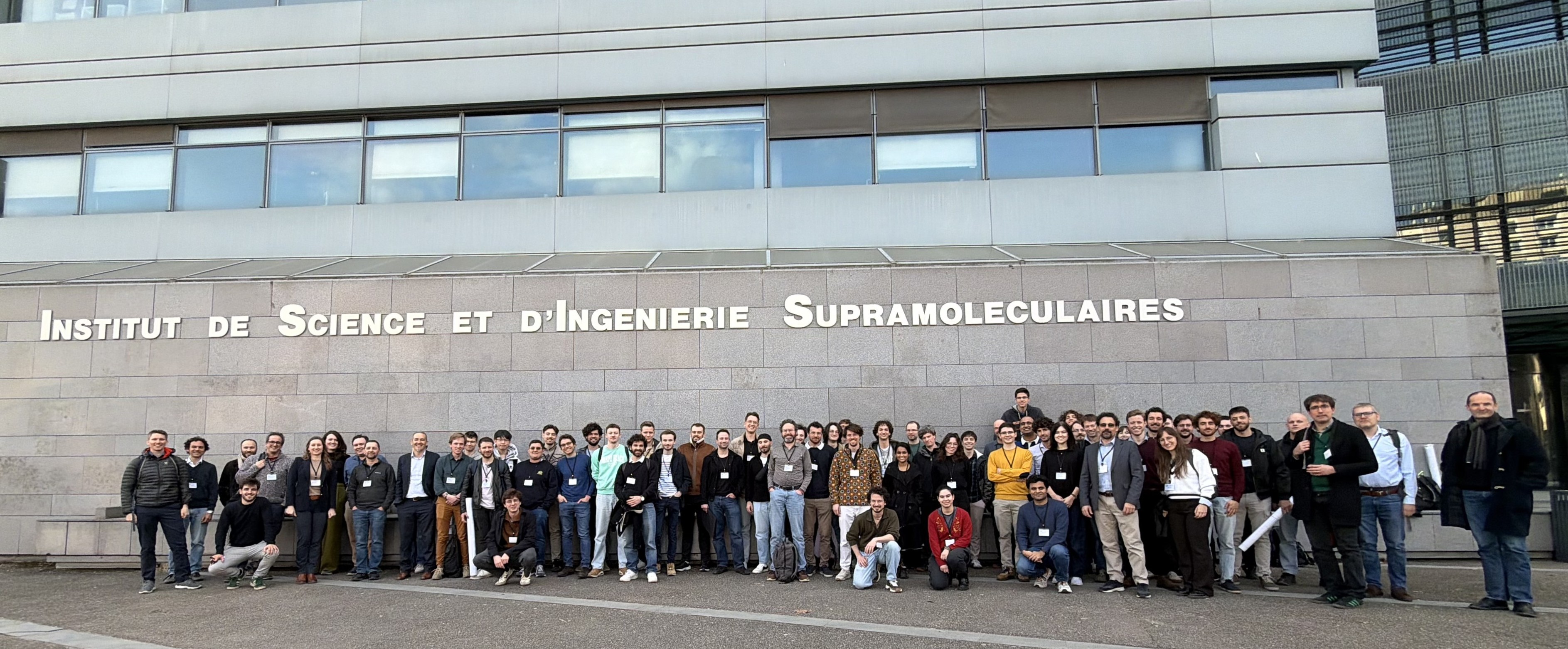
EuRyQa’s final conference, held in Strasbourg from 9 to 11 March 2026, brought together researchers from across Europe for 22 presentations, 20 poster contributions, and a laboratory tour at the Centre Européen de Sciences Quantiques (CESQ), underlining the project’s commitment to knowledge exchange and the development of the next generation of quantum researchers.
Laying the groundwork for Europe’s quantum future
With the EU Quantum Act on the horizon and the European quantum strategy accelerating, EuRyQa’s results are directly relevant to the next phase of Europe’s effort to build competitive quantum computing capabilities. The project has demonstrated that neutral atom technology can be a leading, if not the leading, platform for fault-tolerant quantum computing, and it has shown how tightly coordinated collaboration between academic and private-sector partners can deliver results that strengthen Europe’s position in the global quantum landscape.
As the consortium’s partners continue to build on EuRyQa’s scientific, technological, and commercial legacy, the project stands as a testament to what European collaborative research can achieve when guided by a clear long-term vision and sustained by genuine partnership.